This one is difficult. It’s hard to write, it’s personal. I’m not even sure where to start or why I’m writing it. I wanted to talk about a little about my ‘career’. It’s weird calling it that, is it actually a career or just some guy bouncing around a few jobs?
Anyway…
The Beginning
Growing up, I played football—until I discovered computer games, and then I didn’t. My friends would knock on my door, asking if I was coming out to play (yeah, I grew up in a time before social media), and I’d shrug them off. Eventually, they stopped asking.
My childhood was tough, my parents aren’t the best, lets leave it at that (I could write 100 articles about that in itself), I was seen as the ‘good kid’ because I was quiet but inside I felt like screaming. A fucked up cocktail of anxiety and self-doubt. No one seemed to know or care.
Gaming became my escape. I loved it and wanted to be a part of creating it. I’d buy computing magazines that came with cheat codes you could edit directly in the source code. I’d spend hours typing it all out just to make my car more durable. If you made a typo, you had to comb through every line to fix it.
Then came college and university. I did okay, but most of my time was spent drinking and messing around, just doing enough to scrape by. I’d roll into lectures hungover, half paying attention, and somehow muddled through—until my final year, which was hell.

I was about a year behind my peers, so I had to work overtime just to catch up and get my final project finished. I ended up building a fireworks simulator—a Java particle system—with a 15,000-word write-up explaining what I did and why. It turned out pretty cool and, thankfully, it got me over the finish line.
A Harsh Reality
Coming back home, finding a job was brutal. Remote work wasn’t really a thing yet, so my choices were either to move away or settle for whatever was available locally. My first job paid £12k a year, doing search engine optimisation and editing HTML. It came through a university scheme, which meant I had to write a glowing report about how grateful I was, how much I’d learned, and even give a presentation to 50 people about how amazing the university was. You do what you’ve got to do, I guess.
A year or two later, I started feeling like my skills were being wasted. I’d never done much web development, but I could whip up a desktop app or a game without much trouble. I tried applying for other roles, but options were limited unless I was willing to endure a two-hour daily commute.
To make progress in my current role, I had to pick up some PHP. It was fine, nothing mind-blowing, but it gave me the tools to start building my own projects. I clawed my way up to £17k, but it was a constant battle, arguing my worth with my cheap ass boss every step of the way.
“After bills, I’ve got about £50 left, I’ve literally revamped all the websites from scratch, optimised all the sites so they rank well within Google, any chance of a few extra hundred per month so I can not live off beans on toast?”.
His response?
“I’ll have a think about it”.
This geezer had just bought a new house, a flash car and would go on amazing holidays. Fair play to the guy but come on, pay your staff what they deserve.
So yeah, I left. Landed another job at a company where I was somehow doing IT support and administration. I’d say:
“I’m a developer, I’m not really an IT support guy. I’m probably ill-suited to be fixing printers or assigning role permissions.”
But their response was…
”You can do it though, right? So crack on…”
So yeah, I left.
Bounced around a few more jobs, some were okay, some were bad, some were weird. There was one time where one of my bosses ate a whole chicken dripping in vinegar with his fingers during a client meeting (actually true!).
Yep so I had a few jobs, until I finally landed a job at a proper development company! I was so excited, I’d finally found somewhere I’d be surrounded with other developers….
The Burnout
Don’t get me wrong—taking that job was absolutely the right move at first. I learned a lot, climbed the ranks, and met some truly awesome people.
But remember the childhood stuff I mentioned earlier? The thing about burying those feelings is that they don’t just disappear—they’re always there, lurking beneath the surface. Sure, you can drown them in work for a while, but that’s not a sustainable solution. Eventually, it all comes crashing down.
For me, the way I coped was by building a wall of humor and deflection. If I could make people laugh, maybe they wouldn’t look too closely. Maybe they wouldn’t see the cracks. I became an expert at brushing things off with a sarcastic comment or a joke at my own expense. It worked—for a while. People assumed I was fine but behind that wall, I was barely holding it together.
The problem with relying on humor as a shield is that it doesn’t actually fix anything. It just hides the pain, like throwing a rug over a stain and hoping no one notices. And the longer you keep it up, the harder it gets to let people in, to let them see the real you. By the time everything came crashing down, I’d spent so long pretending everything was fine that even I didn’t know how to face the truth.
I kept taking on more and more work, thinking that staying busy would help. It didn’t. I was miserable, and my personal life was falling apart. I started gambling and drinking—both manageable at first, until they weren’t. One month, I once blew my entire monthly wage on a single hand of Blackjack. When I saw my friends, I’d drink so much so quickly that I’d be completely plastered within an hour and need to be carried home.
That was my rock bottom. I felt completely lost and hopeless, like I was drowning in a sea of meaningless routine. Nothing felt like it mattered anymore—work, life, myself, then I quit.
It was a standard gloomy Monday morning. I dragged myself out of bed, brushed my teeth, threw some half decent clothes on, quickly styled my hair, jumped in my car and set off for work. I wasn’t happy but that was normal, I hadn’t been happy for years, everyone knew it - people avoided me, I was miserable, the old me had somehow slowly faded away, as hard as I tried to be that guy, he was gone, this shell remained.
Coding wasn’t fun anymore, gone where the days where I’d code for fun, where i’d wake up and just start coding for the hell of it. It used to be exciting and fun. I loved it. I’d always wanted to be a coder since I was a kid. But now, I was churning out sub-standard work, cutting corners, working 12 hours a day despite only being paid for 8.
Working for a company who only cared about their bottom line (and still do). I sat down at my desk, opened up my computer and felt sick to the bottom of my stomach, I couldn’t do this anymore, I dreamt about quitting, about standing up and walking out. I typed out my resignation email, deleted it, typed it out again, deleted it, typed it one last time... thinking ‘Just hit send’. I stared it for another few minutes, then thought, screw it.... why not?
Hands down the BEST decision I ever made. Years later I can look back and analyse it, I was completely burnt out, I was stagnant, my skills were massively out of date. I was lost. I figured I’ll take a few weeks to clear my head, weeks turned into months, months turned into years.
Luckily, I had some money saved up and some support, I stopped coding for three years, I couldn’t face opening my laptop.
Levelling Up
I’m still not entirely sure how I found my way back to coding. One day, I just started dabbling with some projects—not really focused, just playing around. Then out of the blue, an old colleague reached out and offered me my previous job back. I was hesitant at first, but I trusted him, so I thought, why not?
Once I got back into the swing of things, I realised something had shifted. It wasn’t the company—it was still the same old story. The change was in me. I wanted to do things properly this time. It was like a fog had lifted, and for the first time, I could see just how bad my old code was. Looking back at it was almost embarrassing—what had I been thinking?
The trouble with trying to do things the right way in a company that only cares about "getting it done" is that it inevitably creates friction. In my first stint there, I didn’t know enough to recognise bad practices, so I just went with the flow. But now, I couldn’t unsee it. I refused to churn out sub-standard work anymore. My projects took a bit longer, but the quality was miles better.
I started diving deep into fundamentals—design patterns, data structures, algorithms, clean code principles, and how to make incremental improvements. I used this knowledge to clean up the codebase and help other developers level up their skills. But it wasn’t exactly welcomed. I faced constant pushback—arguments over code changes, the lack of tests, and the potential for production issues. I lost more battles than I won. Production broke, just as I’d warned it would. Instead of fixing the root problems, they kept hiring more support engineers to slap together quick fixes, which only made things worse.
It wasn’t pretty. There were some blowouts, and I lost a few friendships along the way. But I moved on. The silver lining was that all the effort I’d put into levelling up paid off. I landed some fantastic roles after that, each one pushing me to grow even more as a developer.
These Days…
These days, I’ve rediscovered my love for coding! The version of me from before the burnout—the one who was running on fumes and chasing approval—is long gone. I’ve come to terms with the fact that I’m not that person anymore, and honestly, I’m grateful for it. In his place, a more mature, grounded version of me has emerged. This version isn’t just focused on doing the work; he wants to help others along the way too.
I’ve channelled that new mindset into some exciting projects. I wrote a book titled How To Survive The Tech Industry (check it out here), started tackling side projects, and began working my way through an ever-expanding list of topics I want to learn. There’s always something new to explore, and for the first time in years, I’m genuinely enjoying the process. Whether it’s improving my skills, experimenting with new tech, or just indulging my curiosity, I feel like I’ve found my rhythm again.
On the personal side of things, after 15 years of no contact, I decided to reach out to my parents. It wasn’t an easy decision, and to be honest, it’s been a little awkward. We’re still figuring out what a relationship looks like after so much time apart, and there’s a lot of unspoken history between us. But despite the discomfort, I think there’s a chance for some healing—maybe for both of us. It’s still early days, but I’m cautiously optimistic.
As for what’s next? Who knows. These days, I try to approach everything with a sense of purpose and care. Whether it’s coding, writing, or helping others, I aim to do things properly and with intention.
Maybe one day I’ll circle back to game development—after all, that’s where this whole journey started. But for now, I’m just enjoying the ride and seeing where it takes me.
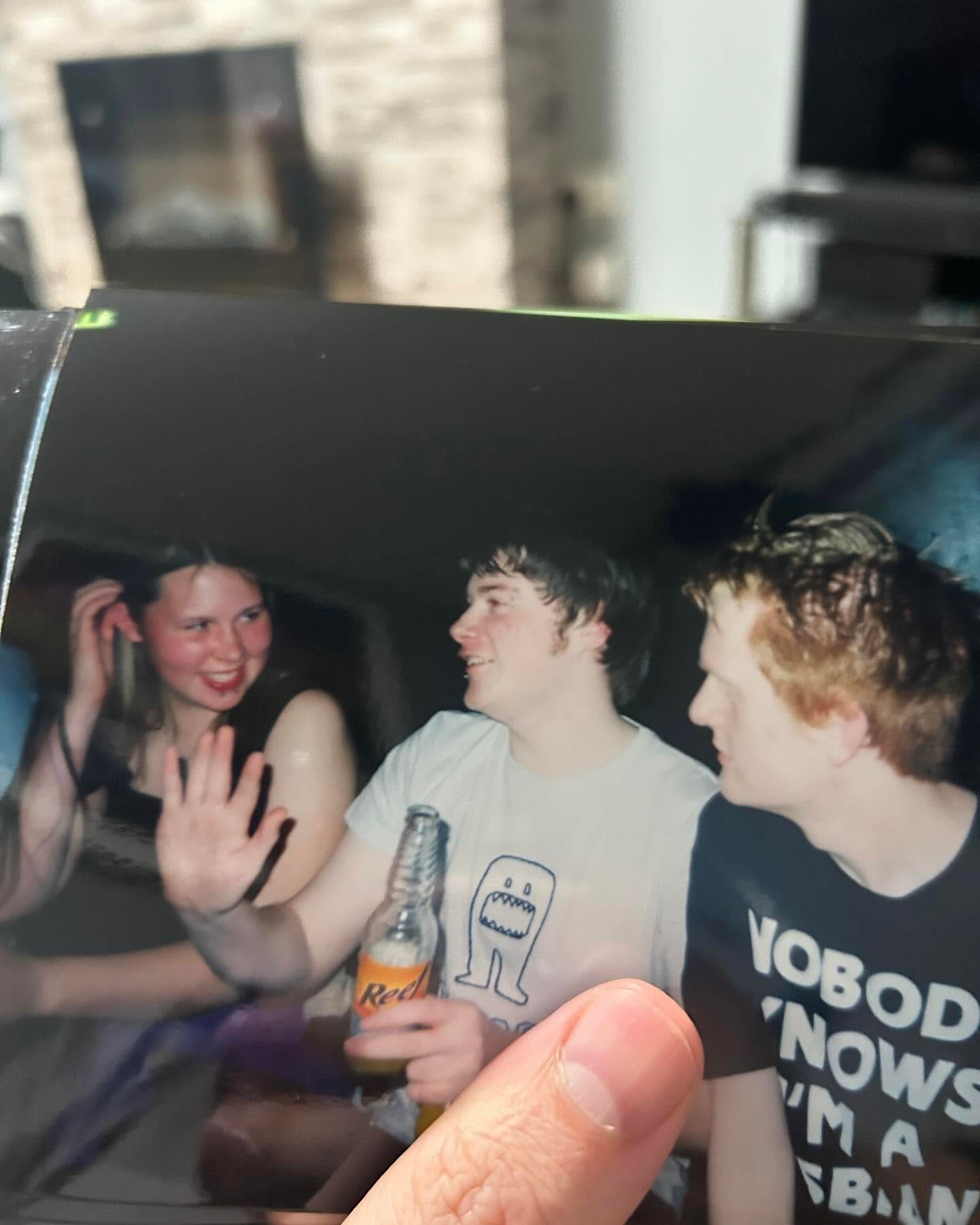
Thanks for reading! Here’s a picture of me being a weirdo.

The Grumpy Dev is a reader-supported publication. To receive new posts and support my work, consider becoming a free or paid subscriber.