Honestly, I’m starting to worry. Not because AI is better than us but because the perception is shifting. I suspect people might start thinking developers are no longer needed. That AI can simply replace years of experience and hours of problem-solving.
And yeah, I’m feeling it. It’s very much real.

My contract runs out soon, I’ve got a few months of cash and then I’m dry. I might have to start selling my body on the street again. Dark times. Dark times indeed…
*flashback*

Younger me might have been a bit more ‘whatever’ about it (not about selling my body on the streets, about being unemployed….. ), but I’m getting older now. Ageism is definitely real, no one likes to admit it, but it’s out there.
Some employers and recruiters try to guess your age from your career timelines and, based on that, will exclude you from the hiring process altogether (I’ve seen it happen) so my options are limiting year by year.
So… what can I do about it?
AI tools are becoming more common in software development. They can write code snippets, suggest fixes, even generate entire functions. But AI isn’t magic. It’s a tool that still needs someone with vision and expertise to guide it.
The real risk isn’t AI itself, it’s the misconception that developers are suddenly obsolete.
And they’re not. Right?

We’re not. Right?
AI is changing the game, it looks like I need to adapt and learn to have AI work for me, not against me. I have two choices:
Resist, and risk being sidelined.
Adapt, learn, and lead the change.
Building on experience
It’s clear that non-technical people are going to increasingly interact with code, whether it’s through low-code platforms, no-code tools, or just simple automation.
The best move is to lean into it. We can help by guiding them, offering low-code assistance, or creating tools that empower them without sacrificing quality.
By collaborating and sharing our expertise, we turn what could be a challenge into an opportunity to build better, more accessible solutions together.
We’ve got years of experience, understanding how systems work, how code fits into the bigger picture, and how to deliver value. AI can never replace that insight.
With that in mind, here’s my next steps:
Learn more about low-code / no-code platforms.
To stay relevant, it’s crucial to become well-versed in these tools. Understand their capabilities, strengths, and limitations.
Offer low-code / no-code assistance services.
Many businesses are eager to leverage low-code/no-code tools but often lack the experience to do so efficiently. By offering assistance services, I can guide non-technical users.
Develop custom integrations and extensions.
While low-code/no-code platforms provide great flexibility, they can’t always handle complex or highly customised requirements. A hybrid approach combines the speed and accessibility of low-code tools with the power and flexibility of custom code.
Create prompt documentation and best practice guides.
Clear, accessible documentation is key to helping teams adopt new tools successfully. Prompt documentation and best practice guides tailored specifically to low-code/no-code users and their unique challenges.
In closing…
I’m hoping to turn the rising tide of non-technical involvement into an opportunity to expand my role — from coder to mentor, integrator, and enabler of better technology solutions.
My role is shifting, whether I like it or not. It seems that sharing my experience, helping others ask the right questions, and guiding non-technical people through the new AI and low-code landscape will be soon just be as important as writing code itself.
Wish me luck!
I’ll be fine. I think.
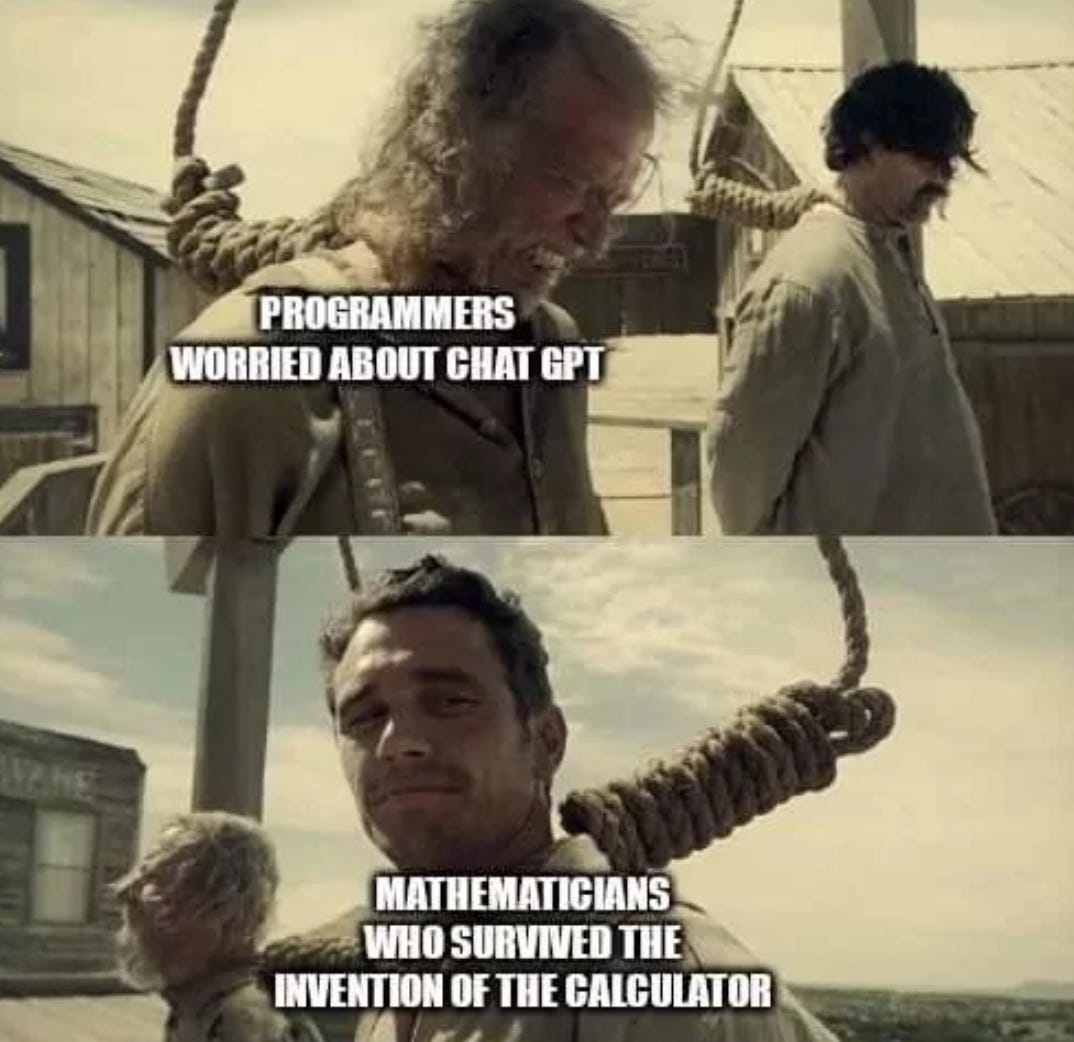
First time?
P.S - Check out Profizzle.
I built a thing (didn’t vibe code it either, but I will vibe code in future, honest…).
It’s quite cool and completely free.

Link: https://profizzle.co. Profizzle yo’ nizzle, nephew.
P.P.S - probs gonna be sued off Snoop Dogg.